
 &
& 


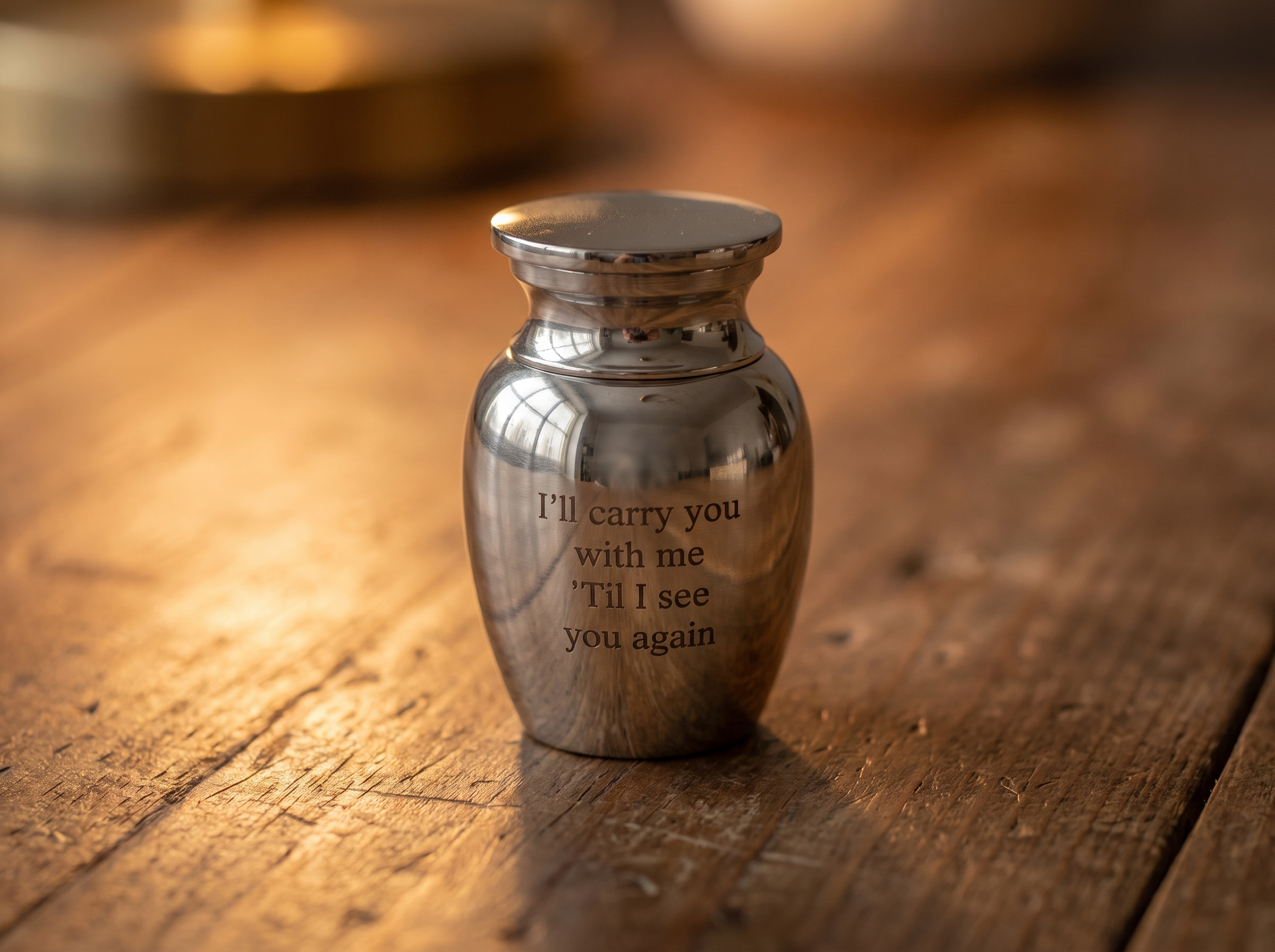
Ashes can be divided between family members at any time after the cremation, and once they have been returned to you no permission, paperwork or legal process is required. Most families end up splitting into three to five portions: one main urn or scattering, plus a keepsake urn or ashes necklace for each person who wants something of their own.
The dividing itself takes twenty minutes. The conversation about who gets what can take two years, and that is the part nobody warns you about.
Can ashes legally be divided between family members in Australia?
Yes. There is no Australian law requiring cremated remains to be kept whole, kept in one place, or kept at all. Once the crematorium releases the ashes to the person who arranged the cremation, the family decides what happens next.
One legal point is worth knowing before an argument starts. Ashes do not form part of a deceased estate and cannot be left to a particular person in a will. A wish written in a will about ashes carries moral weight with a family, but it is not a direction that can be enforced the way a bequest of money or property can. In practice this means the decision comes down to the family reaching agreement, which is why it helps to give everybody something rather than making it a contest.
Who decides how the ashes are shared?
Usually the person who arranged the cremation, simply because the crematorium releases the ashes to them. That is an administrative fact rather than a moral one, and families run into trouble when the two get confused.
The approach that keeps families intact is to treat the division as a default rather than a decision. Instead of asking who wants a share, which forces people to advocate for themselves while grieving, decide that everybody in the immediate family receives one and let individuals decline. Almost nobody declines. But asking them to put their hand up is asking them to compete, and that is where the long silences start.
How many keepsakes does a family actually need?
More than the number currently in your head. The single most common regret families report is ordering for the people who spoke up and forgetting the people who did not.
Work from this list rather than from memory:
- Every child, including step-children and children of a previous marriage.
- The surviving partner, who often wants something separate from the main urn.
- Grandchildren, who grieve differently but grieve, and who will want something when they are older even if they shrug now.
- Siblings of the person who died, who are frequently overlooked in favour of children.
- A best friend, carer or neighbour who was present through the last months.
- Family overseas who could not get to the service and have had no moment of closure at all.
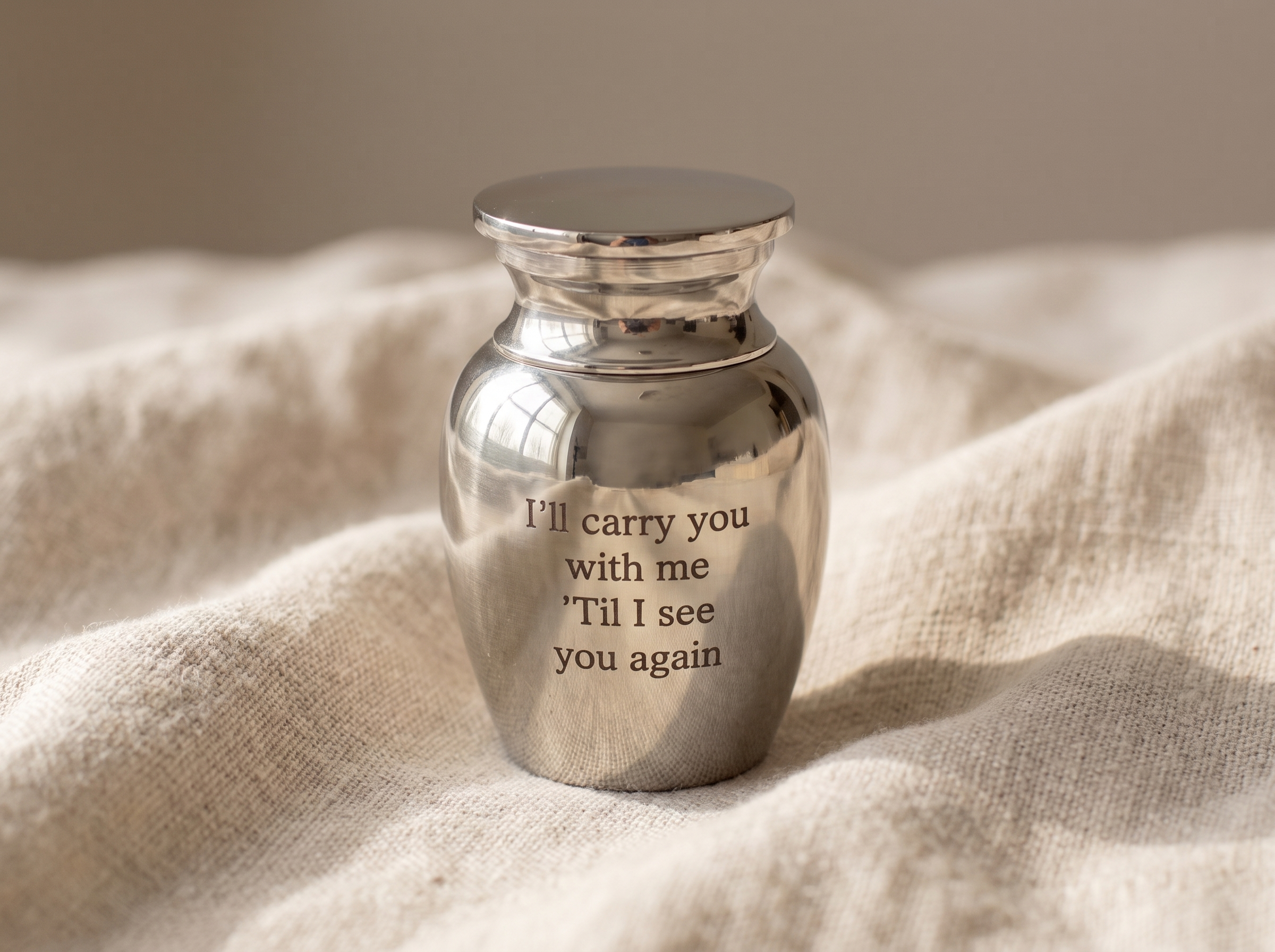
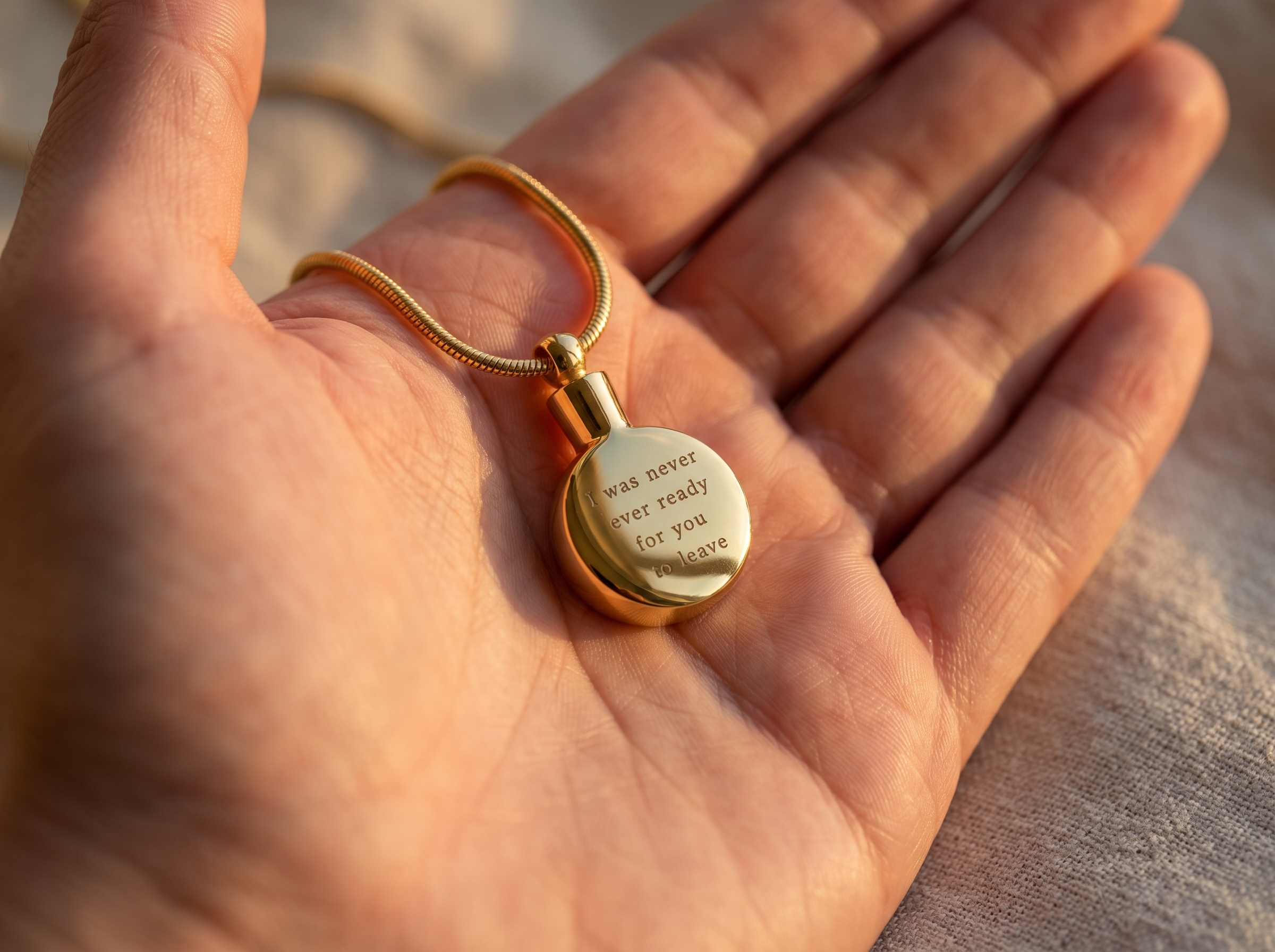
That list is often eight or nine people, which sounds like a lot until you remember that a single portion can supply all of them with plenty to spare. A Mini Personalised Keepsake Urn suits the people who want to keep a share at home, and a Circle Cremation Necklace suits the ones who would rather carry it.
Who should physically divide the ashes?
Most crematoriums and funeral directors will divide ashes into separate portions on request, and if the thought of doing it yourself is unbearable, ask them. There is no medal for handling it personally.
Families who do it at home generally find it less distressing than they feared. Lay down a sheet, work on a flat bench, use a funnel, fill the smallest pieces first while your hands are steadiest, and do it with one other person in the room. Whatever you do, do not do it the week of the funeral. Wait until you have slept.
What if one person wants to scatter and another wants to keep?
This is the most common fracture in a grieving family, and dividing the ashes is precisely what resolves it. It is not a compromise where everyone loses. The scattering still happens at the headland, and the sibling who cannot bear the idea of letting go still has something in their hand afterwards.
Take the keepsake portions out first, before the scattering is arranged. Once ashes are scattered there is no retrieving a share, and the person who was quietly hoping for one will not ask twice. Ten minutes of forethought prevents a decade of resentment.
When should you give family their keepsakes?
Not at the wake. Everybody is depleted, half the room is holding a plate, and something that should be a moment becomes a transaction between the sandwiches and the car park.
Give them separately, in a quiet room, to one person at a time. The first Christmas without someone is when the empty chair is loudest, and a keepsake handed over in December lands differently to one handed over in a car park in autumn. Presenting it in a Belle Fever Luxury Gift Box gives the person a second to sit with it before they have to say anything, which is the kindest part of the whole exchange.
For anyone who missed the service entirely, a keepsake arriving in the post is often the first piece of closure they have been given. Say so in the note.
Can ashes be split between family members?
Yes. Ashes can be divided at any time after the cremation. No permission or paperwork is needed once they have been returned to the family, and many crematoriums and funeral directors will divide them on request.
Is there a legal limit on how many portions ashes can be divided into?
No. Australian law places no limit on how many portions ashes may be separated into, or on how many people may keep a share.
Can a will decide who gets the ashes?
Ashes do not form part of a deceased estate and cannot be distributed under a will. A wish expressed in a will carries moral weight with the family but is not enforceable in the way a bequest of property is.
How many keepsake urns should we order?
Count every child, the surviving partner, grandchildren, siblings of the person who died, and close friends or carers. Families more often regret ordering too few than too many, and one portion of ashes easily supplies eight or nine keepsakes.
Can we still keep a share if the ashes are being scattered?
Yes, but the keepsake portions must be taken out before the scattering takes place. Once ashes are scattered, a share cannot be recovered.
What if a family member decides years later that they want a share?
That is common, and as long as a portion is still being kept, a share can be taken from it at any time. This is one reason many families keep a main urn rather than scattering everything.
